Intro
.webp)
What happens if water damage is not dried properly?
Worried your walls are playing sponge at your place?
Stay with us, and we will keep it simple and fast.
Elite Restoration — a national, compliance-first provider — explains simply.
Think of this as a weather report for soggy houses.
What Happens If Water Damage Is Not Dried Properly Right After a Leak
Water does not sit still like a lazy croc on the bank.
It creeps into anything that will let it in.
Plasterboard says, “come on in.”
Insulation throws a party.
Timber framing grabs a drink.
Cabinets join the conga line.
-
Moisture moves through surfaces fast.
-
Humidity jumps like a summer day in Brisbane.
-
Materials start soaking up water like Weet-Bix.
-
Germs can show up if the source is not clean.
Looks dry on top.
Still wet inside.
Like a meat pie straight from the servo.
What Happens in the First Day to Three Days
This window is critical.
If drying does not start well, the mess grows legs.
-
Moisture pushes deeper into walls and floors.
-
Humidity stays high and sticky.
-
Mould spores wake up and stretch.
-
Plasterboard softens and sags like a wet hat.
In warm Brisbane weather, this kicks off even faster.
Like mozzies at dusk by the river.
What Happens After a Week or Two
Now the party gets loud.
-
Visible mould pops up on walls and ceilings.
-
Musty odours roll in like a damp gym bag.
-
Brown stains show up and spread.
-
Materials start to crumble and warp.
What you can see is only the trailer.
The full movie is inside the cavities.
Moisture lingers in insulation and framing.
Damage keeps stacking up like trolleys at Bunnings.
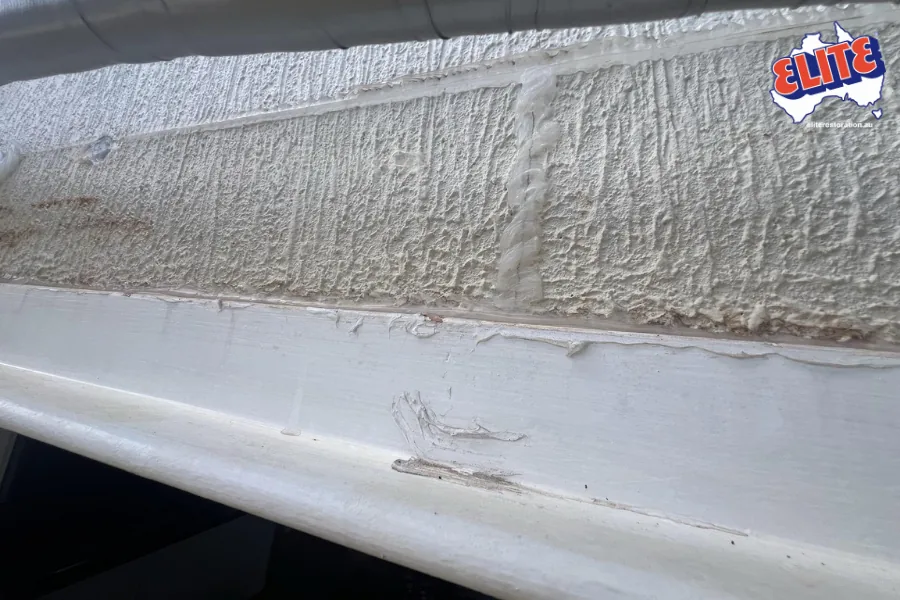
CASE STUDY: Storm Damage Leading to Hidden Moisture and Mould Risk
Storm events can often cause unseen damage that develops into larger issues over time.
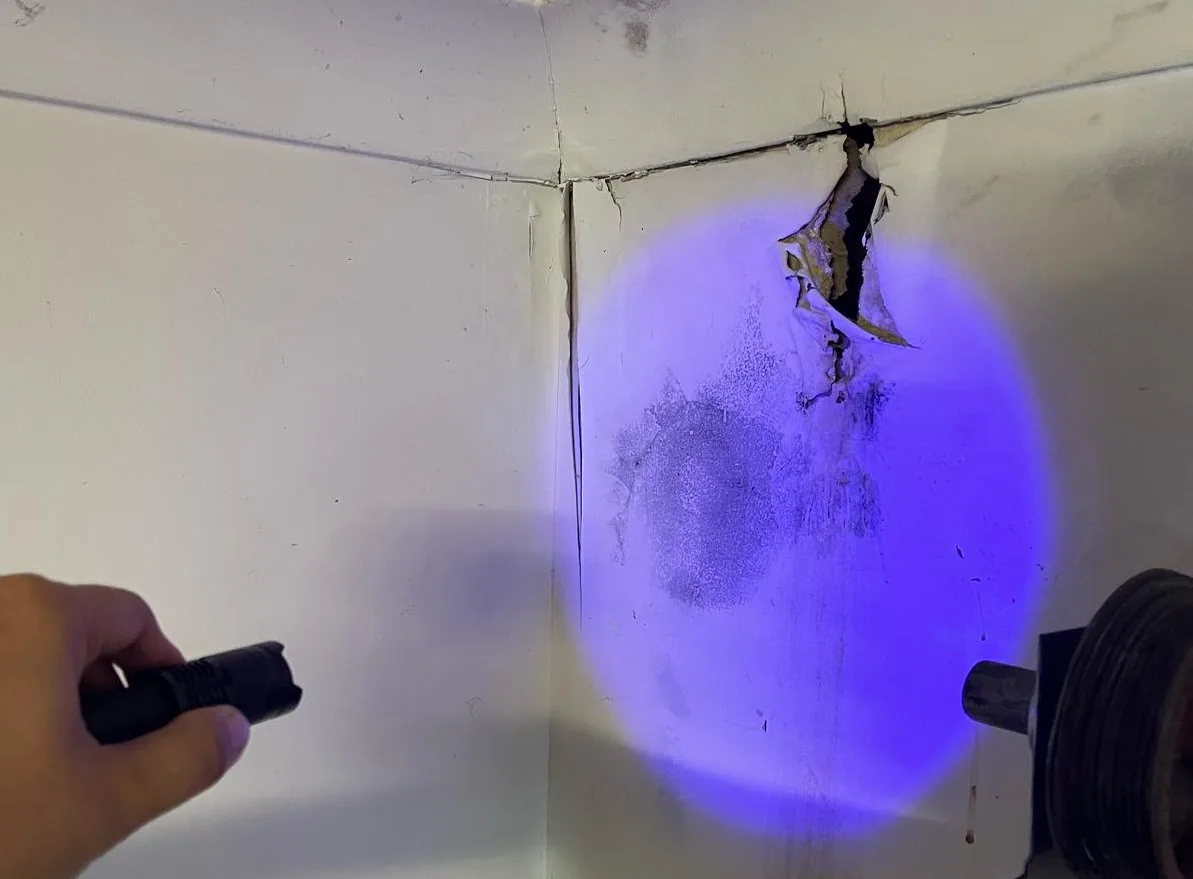
On 12 November 2025, Elite Restoration attended a property following concerns about possible storm-related damage and mould growth around a window area.
Initial reports indicated uncertainty around the extent of the damage, particularly following a recent hail event.
Assessment identified that storm impact had compromised the external wall, allowing water to enter through the window frame and affect internal materials.
This resulted in localised damage to plasterboard, trims, and paint, with conditions suitable for mould amplification.
The affected zone remained contained but required professional attention due to the presence of contaminated moisture.
This case highlights the importance of early inspection and proper remediation following storm damage.
Addressing both the internal impact and the external entry points is critical to preventing ongoing moisture issues.
Following restoration, repairs and improved sealing measures help ensure the property remains protected against future weather events.
Long-Term Problems When Water Damage Is Not Dried Properly
Hidden mould growth
Mould loves quiet, dark spots.
Wall cavities are like a beach shack with no rent.
-
Mould spreads behind paint and plasterboard.
-
Spores travel through the air like confetti.
-
The growth keeps going even when surfaces look dry.
Once you see it, there is usually more behind it.
Structural deterioration
Moisture is not kind to your home.
-
Plasterboard gets soft and crumbly.
-
Timber swells and warps like a cupped cricket bat.
-
Fasteners loosen and joints shift.
-
Floors and subfloors can buckle.
Clean and paint will not restore this part.
It needs proper drying and sometimes new materials.
Persistent odours
That musty smell is the house whispering, “help.”
-
Mould and bacteria make stubborn odours.
-
Damp materials break down and stink.
-
Smells hide inside the structure, not just on top.
Spray and pray does not work here.
Remove the moisture, and the smell will follow.
Moisture migration
Water is a sticky beak.
It goes where it wants.
-
It walks through wall cavities.
-
It climbs into ceilings and next rooms.
-
It sneaks into floors and the subfloor.
The wet area grows, and the restore gets bigger.
Bigger bills and longer restore times
The longer it sits, the more it costs to sort out.
-
More materials need treatment or removal.
-
Drying takes longer.
-
Extra steps like cleaning and odour removal stack up.
Quick action saves time and saves stress.
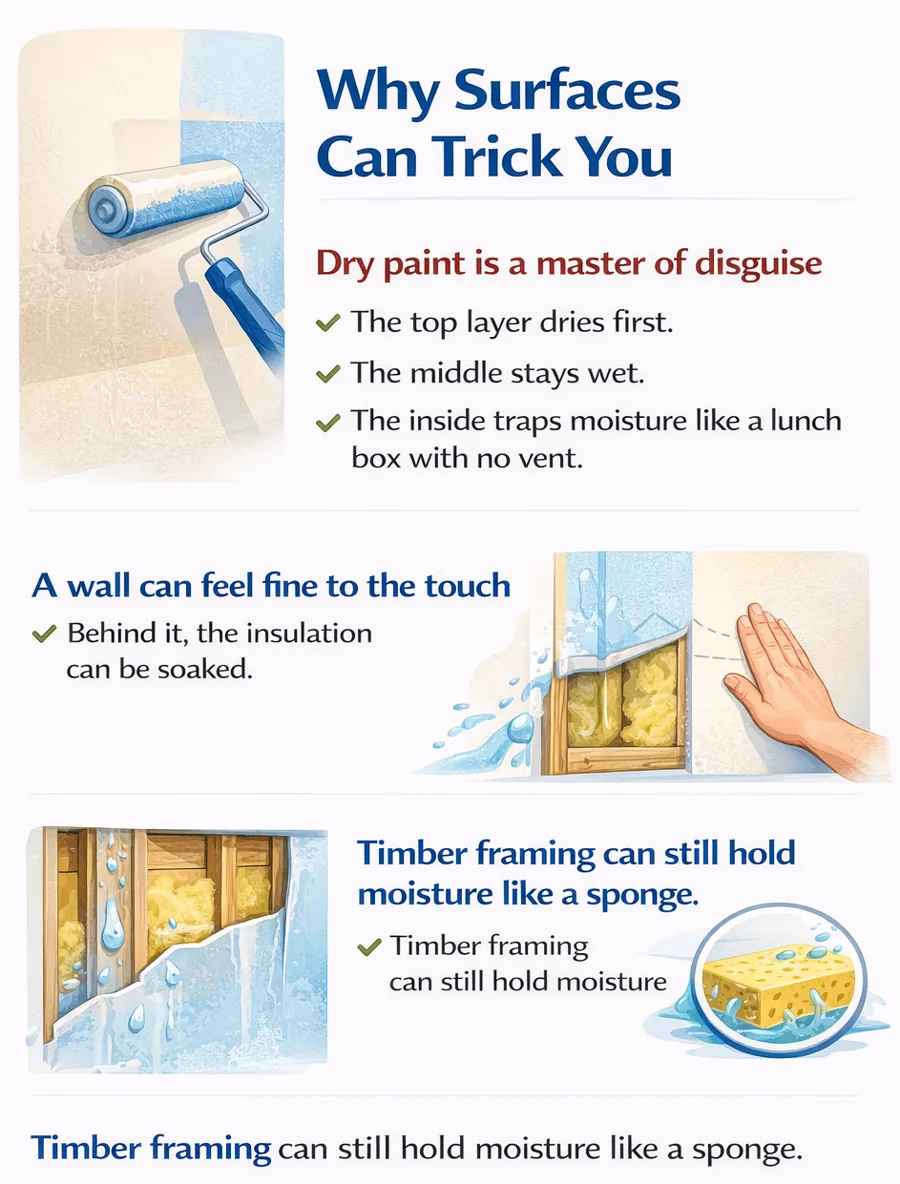
Why Surfaces Can Trick You
Dry paint is a master of disguise.
-
The top layer dries first.
-
The middle stays wet.
-
The inside traps moisture like a lunch box with no vent.
A wall can feel fine to the touch.
Behind it, the insulation can be soaked.
Timber framing can still hold moisture like a sponge.
Brisbane Weather Makes It Tougher
Humidity in South East Queensland is like a warm hug you did not ask for.
-
High humidity slows evaporation.
-
Warm temps give mould a head start.
-
Air con can add condensation and weird microclimates.
Waiting for nature to restore it is like waiting for the bus on a public holiday.
It might show up next week.
Why Waiting and Fans Are Not Enough
Open windows help the breeze, but only a little.
-
Airflow does not reach inside cavities.
-
Humid air cannot pull out deep moisture.
-
Materials stay wet, and problems keep brewing.
You get a half-dry home and a full set of headaches.

How Pros Dry a Property the Right Way
Think science, not guesswork.
-
Air movers push evaporation where it matters.
-
Dehumidifiers pull water out of the air.
-
Moisture meters and thermal cameras guide the plan.
-
Targeted openings let hidden areas breathe.
-
Daily checks make sure drying stays on track.
Elite Restoration works to the IICRC standards for water damage and aligns with CM3 compliance; you can read about them here.
How to Spot If It Was Not Dried Properly
-
Mould shows up after a leak or flood.
-
That damp gym bag smell will not quit.
-
Paint bubbles or peels like old sunburn.
-
Brown stains come back after you clean them.
-
Rooms feel humid even with air con.
-
Surfaces feel cool or clammy to touch.
Any of these signs mean moisture might be hiding inside.
Simple Steps You Can Take Today
-
Stop the source and turn off water if safe.
-
Move rugs and furniture to a dry area.
-
Open windows if the air outside is dry.
-
Run air con on dry mode if you have it.
-
Call for a moisture check and a proper drying plan.
A quick chat now beats a full reno later.
FAQs on What Happens If Water Damage Is Not Dried Properly
How fast can mould start after a leak
It can begin within one to three days in warm, humid weather.
Faster in Brisbane summer.
My wall feels dry so am I fine
Not always.
The inside can still be wet and hiding trouble.
Can I just use heaters and a fan
That helps the surface only.
You still need dehumidifiers and proper airflow to finish the job.
How do you check for hidden moisture
With a moisture meter and a thermal camera.
They show wet spots without ripping walls apart.
Do I need to remove the skirting or open the wall
Sometimes, yes, to let air reach the wet cavity.
A tech will test and explain the best path.
When should I call for help
As soon as you spot water damage or a musty smell.
Sooner action means less mess.
Need a Hand Right Now
Book a quote with Elite Restoration and get help.
Want to talk to a real person?
You now know what happens if water damage is not dried properly.