Intro
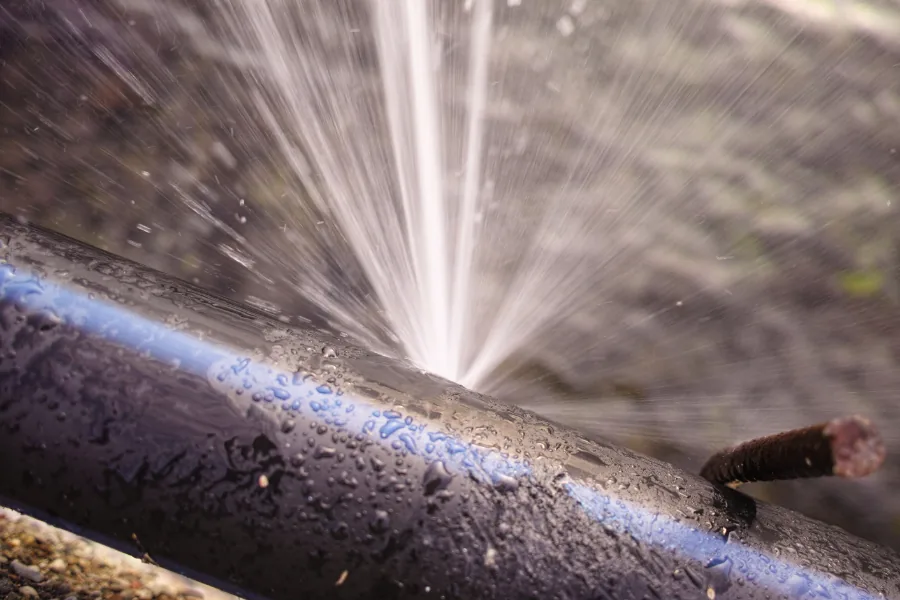
Proper water damage restoration on your mind?
Water on the floor and stress up to your eyeballs?
Stick with us, and we will keep it simple and get you sorted.
Easy steps and a few laughs so you can breathe again.
Elite Maintenance Services Group is a national Australian provider and a premium, compliance-first partner for commercial, government, healthcare, education, infrastructure, and insurance-related environments, with certified teams and documented reporting.
What Is Proper Water Damage Restoration?
It is the process of returning your property to a safe, clean, and dry condition.
Think of it as first aid for your property, followed by a full restoration.
We stop the source, remove water, dry the structure, clean and sanitise, and repair affected areas.
We follow proven methods aligned with IICRC standards and CM3-compliant processes.
Why Fast Water Damage Response Matters
Water spreads quickly and can cause hidden damage.
Delays can lead to mould growth, structural issues, and increased costs.
Acting fast helps protect your floors, walls, and indoor air quality.
Always prioritise safety by turning off power in affected areas where safe.
ntenance Services Group for reliable water damage restoration.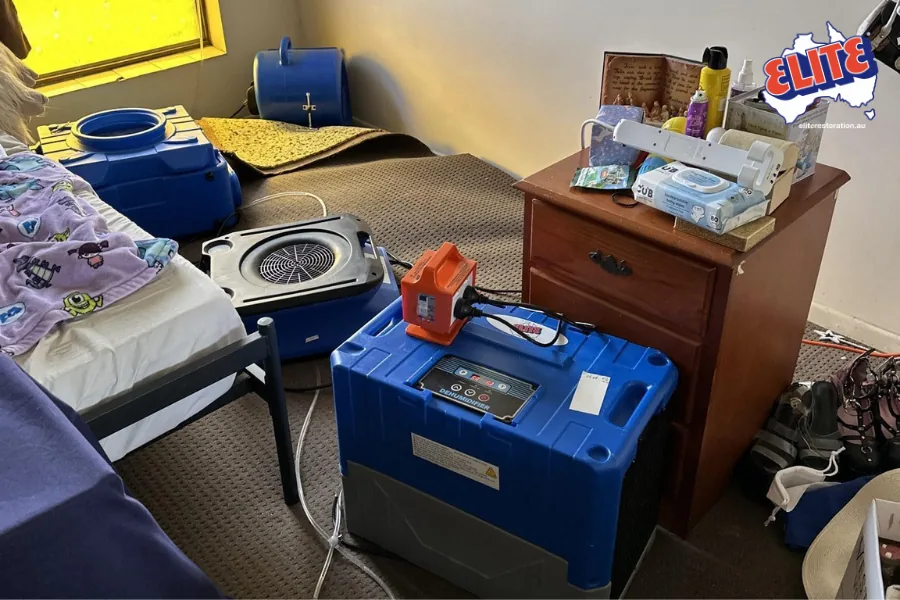
Case Study: Water Damage Assessment and Structural Drying
On 2 March 2026, Elite Restoration was engaged to assess and make safe a water damage incident caused by a burst pipe in the ceiling cavity of a Unit.
The clean water leak migrated vertically, affecting the Unit's toilet, bathroom, and hallway, as well as the Unit below, including the toilet and garage ceiling.
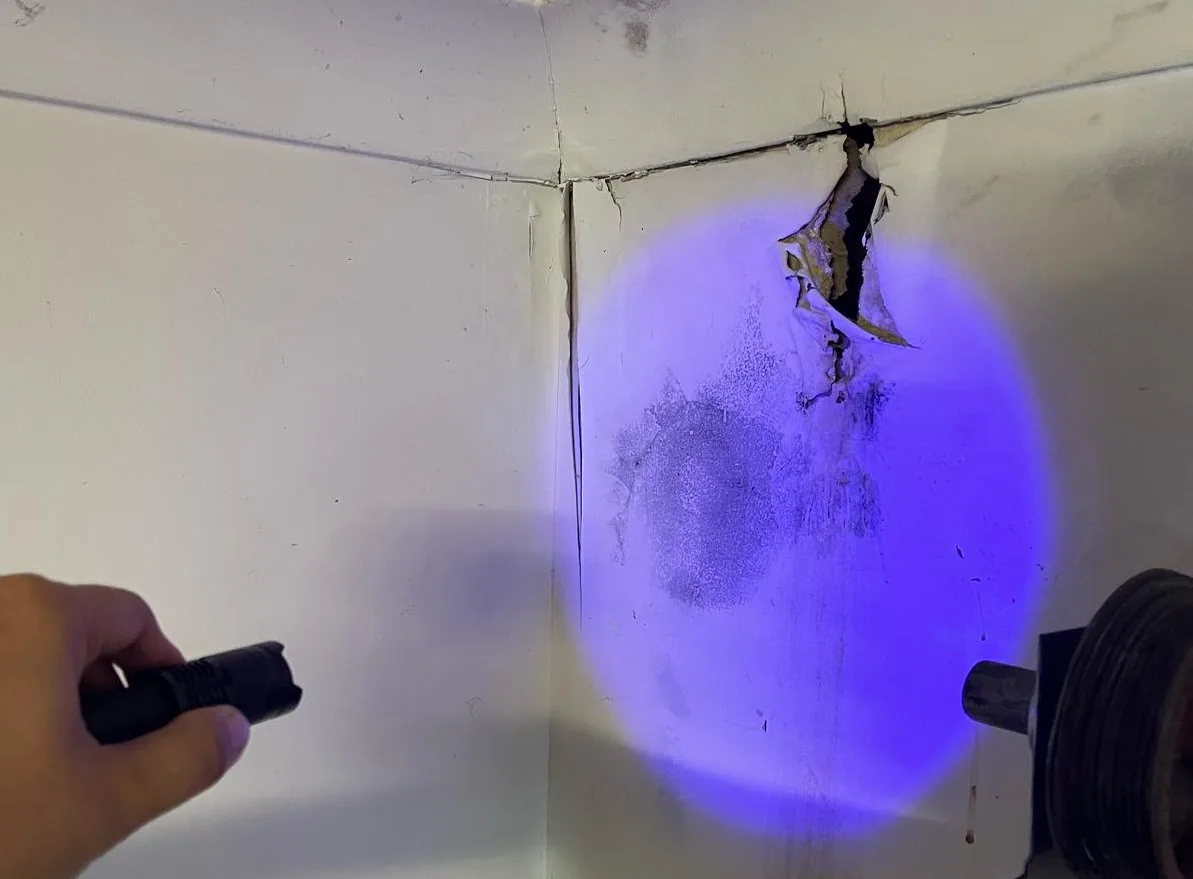
Initial inspections identified moisture within wall cavities, ceilings, and tiled floors, requiring immediate structural drying.
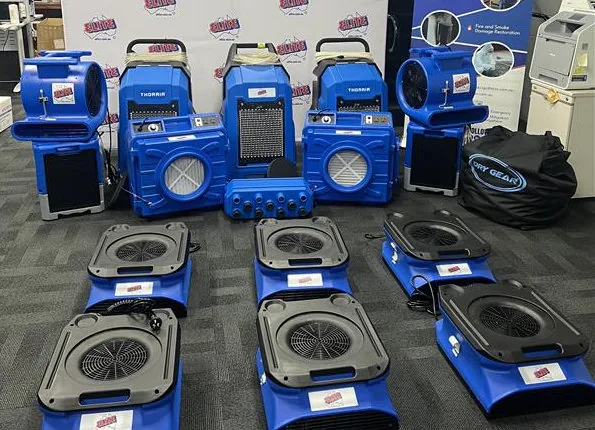
Over multiple attendances, Elite Restoration implemented a targeted drying strategy using dehumidifiers, air movers, and the Octopus drying system to remove moisture from concealed cavities and affected materials.
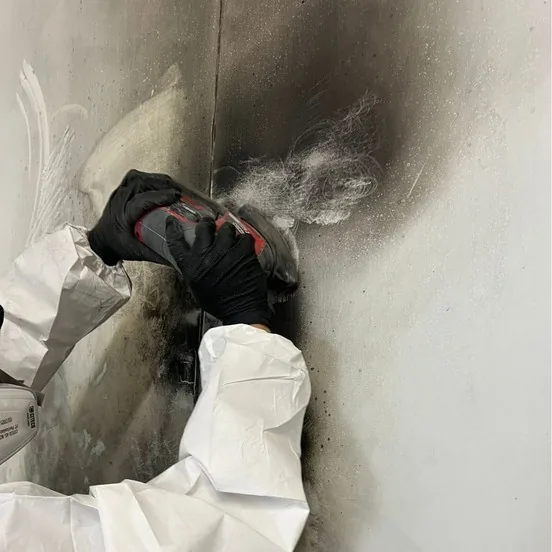
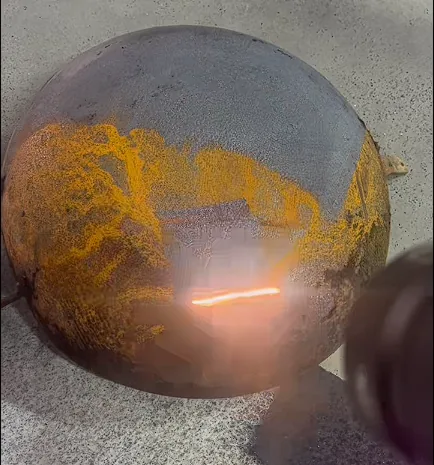
Compromised paint layers were removed to accelerate drying, and airflow was optimised throughout the process.
Thermal imaging and moisture monitoring guided ongoing adjustments to ensure complete drying before reinstatement.
Final inspections confirmed all affected walls, ceilings, cavities, and flooring had returned to acceptable dry levels.
Drying equipment was removed, and the site was left clean and safe.
Elite Restoration successfully restored the property’s structural integrity, preventing further damage and ensuring the environment was ready for reinstatement.
What Not to Do After Water Damage
- Do not ignore the source of the water.
- Do not rely on household fans alone.
- Do not apply excessive heat to speed up drying.
- Do not disturb damaged ceilings or structures.
- Do not use incorrect cleaning chemicals.
Choose Elite Maintenance Services Group for reliable water damage restoration.
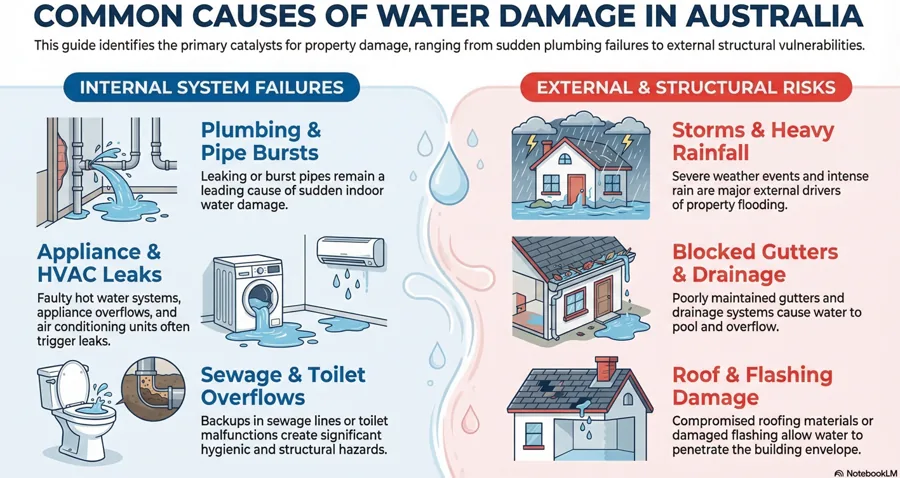
Common Causes of Water Damage in Australia
- Storms and heavy rainfall
- Burst or leaking pipes
- Faulty hot water systems
- Appliance leaks and overflows
- Blocked gutters and drainage
- Roof leaks and damaged flashing
- Air conditioning leaks
- Sewage or toilet overflows
Signs You Need Professional Water Damage Restoration
- Persistent musty odours
- Water stains on walls or ceilings
- Peeling or bubbling paint
- Warped timber or swollen skirting
- Soft or spongy flooring
- Recurring damp patches
- Visible mould growth
Water Damage Restoration Process Explained
Here is how we restore your property step by step.
- Identify and stop the water source
- Inspect and map moisture levels
- Classify water contamination levels
- Extract standing water
- Remove unsalvageable materials
- Apply structural drying with professional equipment
- Monitor and adjust drying daily
- Clean and sanitise affected areas
- Treat and prevent mould growth
- Prepare surfaces for repair and reinstatement
Water Categories Explained
- Clean water from pipes or rain
- Grey water from appliances
- Black water from sewage or flooding
Common Mistakes That Delay Drying
- Sealing off airflow
- Using inadequate equipment
- Leaving wet underlay in place
- Skipping proper sanitisation
- Painting over damp surfaces
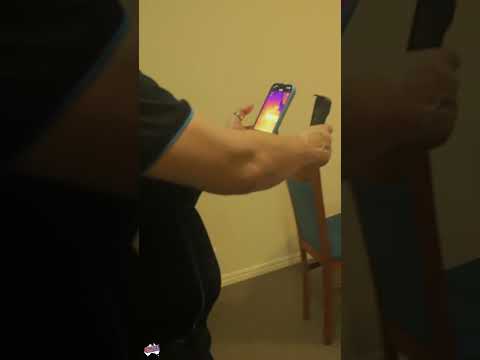
Safety and Equipment Used
- Personal protective equipment (PPE)
- HEPA air filtration systems
- Moisture meters and thermal imaging
- Commercial air movers and dehumidifiers
What You Can Do Immediately
- Turn off water at the mains if safe
- Switch off power in affected areas
- Move valuables and light furniture
- Remove excess water with towels
- Increase ventilation if the weather allows
- Document damage for insurance
- Get immediate help via call now
Insurance-Friendly Tips
Take clear photos before, during, and after the incident.
Keep receipts and records of all actions taken.
Maintain a simple timeline of events for your claim.
FAQs About Water Damage Restoration
How long does drying take?
Most properties dry within three to five days, depending on severity.
Can I handle small leaks myself?
Minor clean water leaks may be manageable, but hidden moisture often requires professional assessment.
How do I prevent mould?
Rapid drying, proper ventilation, and correct cleaning methods are key.
Do you follow industry standards?
Yes, we align with IICRC standards and CM3 compliance.
When should I call a professional?
Call when water affects walls, ceilings, flooring, or if contamination is present.
Need Help Now?
Get fast, professional support to restore your property.
Prefer to speak with someone immediately?
Call now, and our team will assist.